
PACE Transit
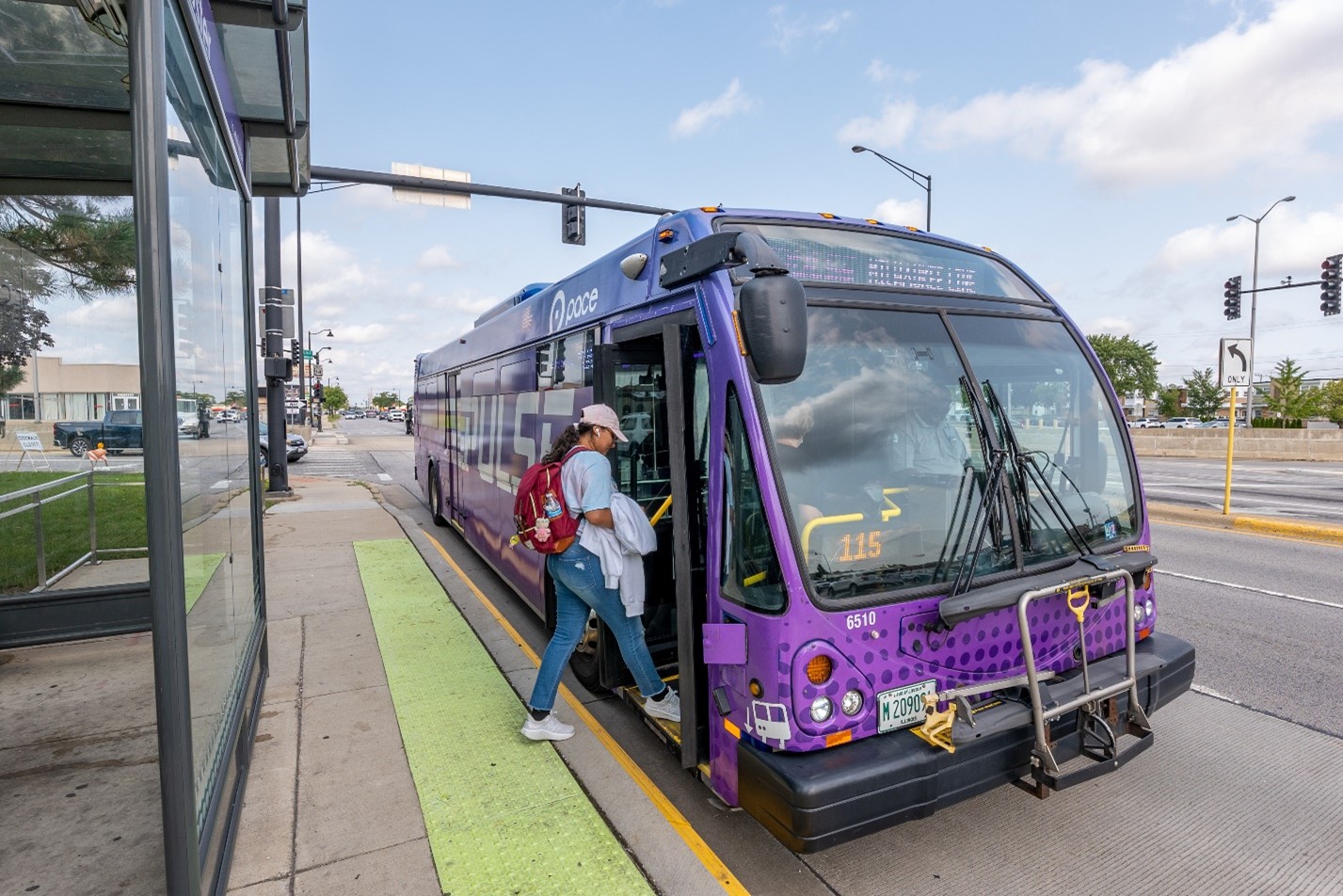
Pace ReVision is a bold plan to redesign the suburban bus network across six counties, making transit more equitable, efficient, and ready for the future.
What is Pace?
Pace Suburban Bus is one of the most extensive suburban transit systems in the country, serving over 5 million residents across suburban Cook, DuPage, Kane, Lake, McHenry, and Will counties. It provides two essential services:
- Fixed-route bus service, including standard local routes and Pulse, a rapid transit program offering faster, more frequent buses on major corridors.
- ADA Paratransit service, providing door-to-door transportation for eligible people with disabilities in compliance with the Americans with Disabilities Act.
As one of the three regional transit boards under the Regional Transportation Authority (RTA) — alongside CTA and Metra — Pace plays a critical role in connecting communities outside of Chicago to jobs, schools, healthcare, and regional destinations.
Investment Scenario Tradeoffs
- Existing Service
- Plus 10 Limited Investment
- Plus 50 Ridership
- Plus 50 Coverage
- Walking Access to Transit
42% of jobs
42% of jobs
37% of jobs
56% of jobs
- Job Access
7% Increase
86% Increase
30% Increase
- 15-30 Min Frequency
A few more routes
Nearly all routes
A few more routes
- 40-60 Min Frequency
Most routes
Only a few
Maintains Increased Frequency
- Weekend Service Frequency
Most routes run on Sunday
Maintains Increased Frequency
Maintains Increased Frequency
About the project

Investment Scenarios
Pace’s future depends on how much investment is available. ReVision explores what the suburban network could look like under different funding scenarios — from modest improvements to a full transformation.
Read more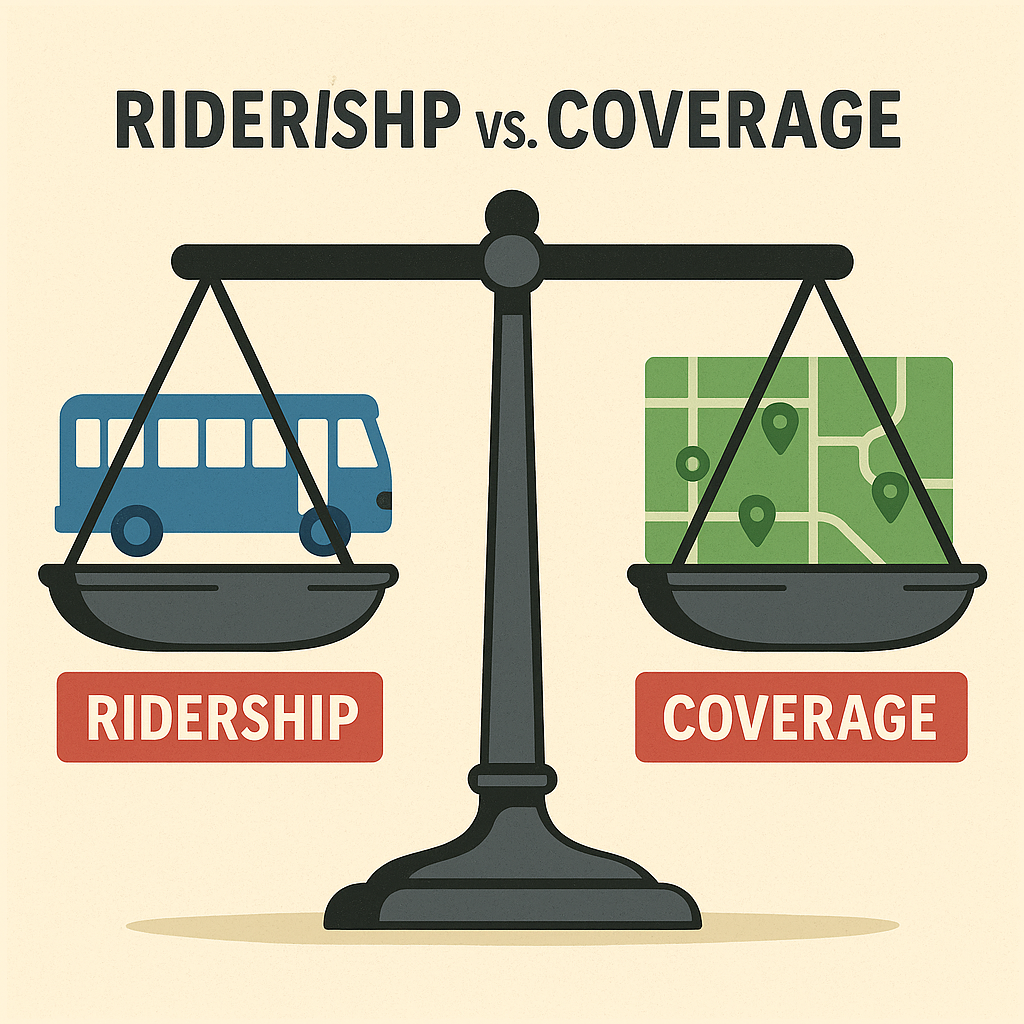
Ridership vs. Coverage
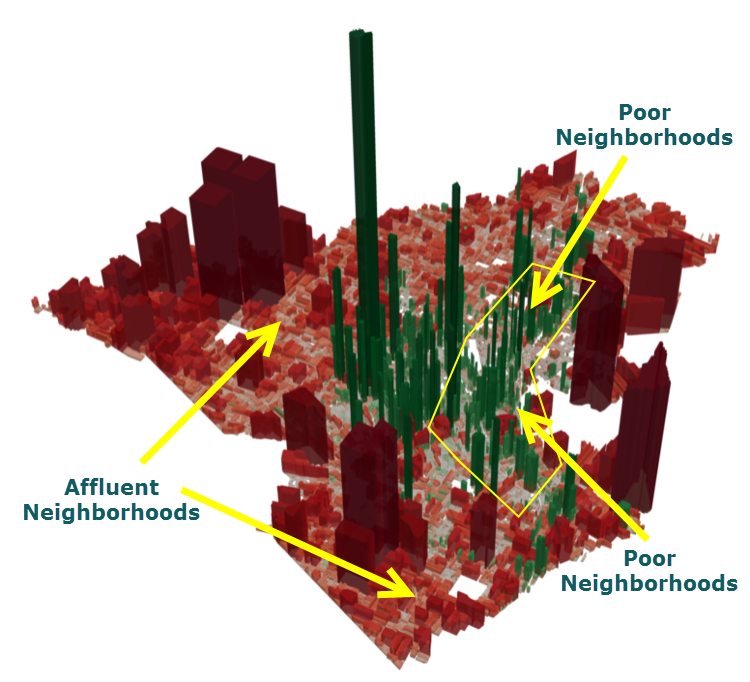
San Antonio’s land is not equally productive — and that has big consequences for the city’s financial health. Urban3’s analysis flips the script on how we typically measure value. Instead of simply looking at the total tax revenue from a property, they ask: how much value is produced per acre of land? When you consider land as a finite resource, this question becomes crucial. Just like we wouldn’t judge a car by how far it can go on one tank without knowing the size of the tank, we shouldn’t judge development by its total value without considering how much space it consumes.
Read more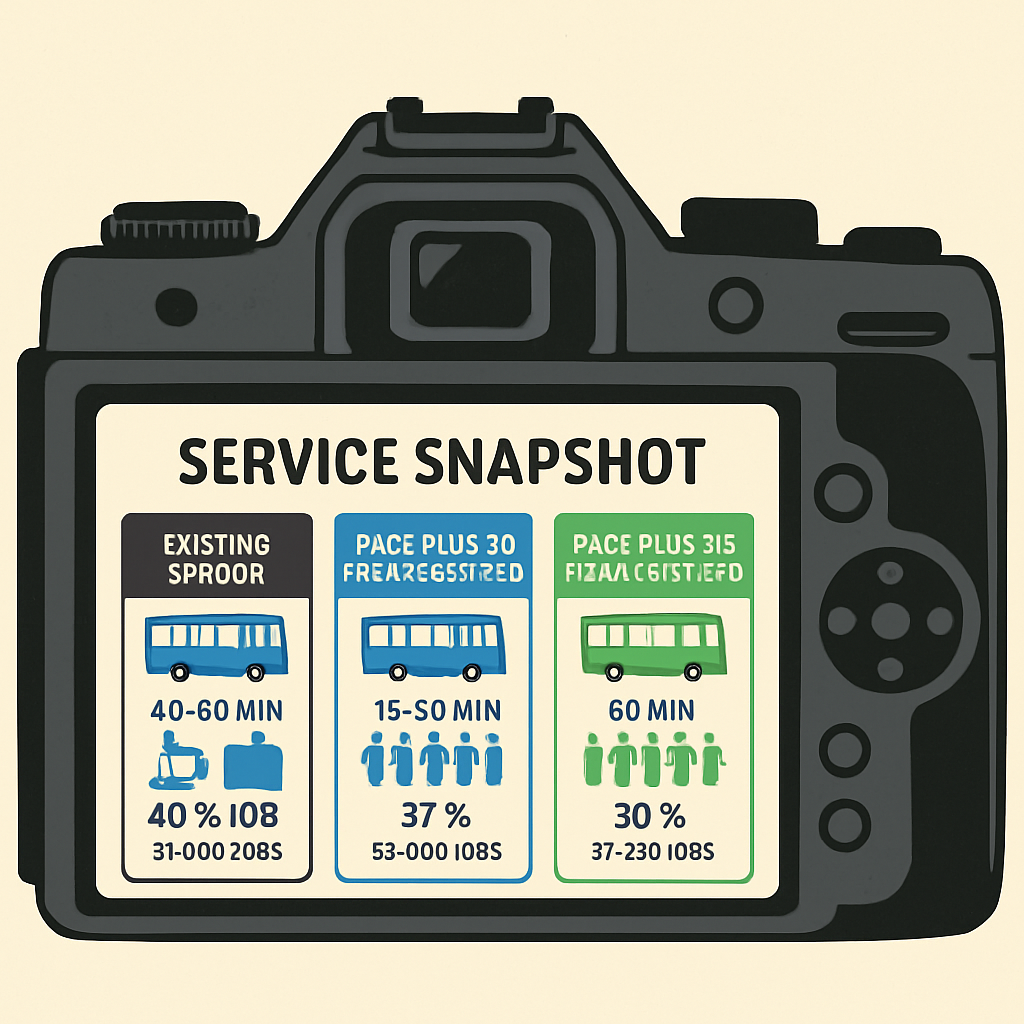
Service Snapshot
Each funding scenario leads to very different outcomes — in how often buses come, how many people live near service, and how many jobs riders can reach.
Read moreShallow Dive
About ReVision: Why This Matters
Pace ReVision is a comprehensive plan to redesign the suburban bus network to meet the needs of today — and tomorrow. The current system was shaped by local transit companies in the 1980s and hasn’t kept pace with the region’s rapid growth and evolving travel patterns.
Today:
- Nearly 60% of suburban residents and jobs are more than a half-mile from any transit.
- Fewer than 5% of people have access to buses that come every 15 minutes.
- Pace receives less than 10% of regional transit funding, despite covering over 3,450 square miles.
This isn't just a transportation problem — it’s an equity, climate, and economic opportunity issue.
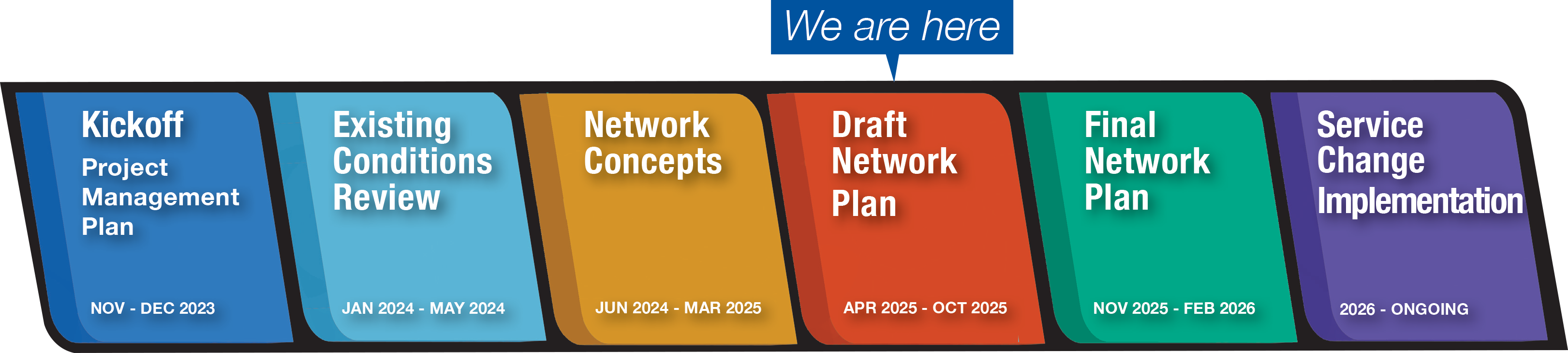
ReVision’s Goals
- Expand access to high-quality transit across suburban areas.
- Modernize routes to reflect where people live and work today — not where they lived in 1983.
- Improve frequency and reliability, especially in communities with limited mobility options.
- Provide clear trade-offs between high-ridership routes and wide-reaching coverage options.
Chapters
Investment Scenarios
Pace’s future depends on how much investment is available. ReVision explores what the suburban network could look like under different funding scenarios — from modest improvements to a full transformation.
Ridership vs. Coverage
San Antonio’s land is not equally productive — and that has big consequences for the city’s financial health. Urban3’s analysis flips the script on how we typically measure value. Instead of simply looking at the total tax revenue from a property, they ask: how much value is produced per acre of land? When you consider land as a finite resource, this question becomes crucial. Just like we wouldn’t judge a car by how far it can go on one tank without knowing the size of the tank, we shouldn’t judge development by its total value without considering how much space it consumes.
Service Snapshot
Each funding scenario leads to very different outcomes — in how often buses come, how many people live near service, and how many jobs riders can reach.
How we got here
-
Data Gathering Begins
Pace initiated the ReVision project to explore how to redesign its suburban bus network. The project kicked off with early planning, outreach strategies, and consultant onboarding.
Pace initiated the ReVision project to explore how to redesign its suburban bus network. The project kicked off with early planning, outreach strategies, and consultant onboarding.
-

Data Analysis Begins
Jarrett Walker + Associates worked with Pace to map existing service patterns, evaluate ridership data, and analyze gaps in coverage and frequency across the region.
Jarrett Walker + Associates worked with Pace to map existing service patterns, evaluate ridership data, and analyze gaps in coverage and frequency across the region.
-
Network Concepts Developed
Three network concepts were drafted:
- Pace Plus 10 (limited investment)
- Pace Plus 50: Ridership
- Pace Plus 50: Coverage
Each explored different goals and funding levels.
Three network concepts were drafted: - Pace Plus 10 (limited investment) - Pace Plus 50: Ridership - Pace Plus 50: Coverage Each explored different goals and funding levels.
-

Public Engagement
Pace gathered input from riders, elected officials, employers, and municipalities through surveys, workshops, and community presentations. Feedback informed refinements to the concepts.
Pace gathered input from riders, elected officials, employers, and municipalities through surveys, workshops, and community presentations. Feedback informed refinements to the concepts.
-
Final Report Produced
The executive summary and full technical report were released, detailing service scenarios, coverage maps, access-to-jobs outcomes, and recommendations for future investment.
The executive summary and full technical report were released, detailing service scenarios, coverage maps, access-to-jobs outcomes, and recommendations for future investment.
-
Next Steps
Pending funding decisions, Pace will move toward implementation planning, including route refinements, operational modeling, and continued stakeholder engagement.
Pending funding decisions, Pace will move toward implementation planning, including route refinements, operational modeling, and continued stakeholder engagement.